

Executive Perspective
In the era of value-based care, organizations are rewarded not only for treating illnesses, but also for preventing them. While much of the focus has been on physical conditions like diabetes or hypertension, a silent driver of poor outcomes and high costs often goes underdiagnosed: depression.
Behavioral health is inextricably linked to overall health. Depression worsens outcomes for chronic diseases, increases hospitalizations, and drives avoidable costs (NIMH). Yet many health systems still capture depression screening reactively, during rushed office visits, or not at all.
That’s where a shift is happening.
By digitizing PHQ-9 screening before the patient enters the exam room, organizations can improve quality scores, close care gaps, and most importantly catch at-risk patients earlier.
The Stakes: Depression Screening as a Quality Imperative
- Prevalence: More than 21 million U.S. adults experience major depressive episodes each year (NIMH).
- Impact on chronic care: Patients with comorbid depression are 2–3 times more likely to be non-adherent to medications and more likely to be hospitalized (JAMA Internal Medicine, ScienceDirect).
- Value-based contracts: CMS and commercial payers require “Depression Screening and Follow-Up” as a quality measure tied directly to reimbursement (CMS Measure #134, CMS Coverage Decision).
- Workflow problem: Traditional screening is often rushed, inconsistently scored, or skipped altogether due to time constraints (Mathews Open Access Study, Journal Watch Trial).
In other words, health systems are leaving both patient outcomes and revenue on the table.
A Digital-First Approach: PHQ-9 Before the Visit
Forward-thinking organizations are leveraging digital scored forms to capture PHQ-9 data outside the four walls of the clinic.
Imagine a patient receiving a secure text message three days before their appointment:
“Your provider would like to understand how you’ve been feeling. Please complete this short, confidential questionnaire before your visit.”
The patient completes the PHQ-9 in a private, pressure-free environment. The system instantly scores responses, flags high-risk patients, and pushes results into the EHR. By the time the visit starts, the provider already knows whether the patient is low, moderate, or high risk and can tailor the conversation accordingly.
This shifts the clinical encounter from data collection to meaningful dialogue.

Why Now?
The healthcare industry is at an inflection point. Value-based care demands measurable outcomes. Depression is one of the leading causes of disability worldwide (WHO). And patients increasingly expect consumer-like, digital-first experiences.
Capturing PHQ-9 data before the visit is no longer an operational “nice to have.” It’s a strategic necessity.
QliqSOFT’s Role in the Transformation
QliqSOFT’s Scored Forms capability within the Quincy Patient Engagement Platform empowers health systems to:
- Automate PHQ-9 outreach based on EHR triggers or population health analytics.
- Securely capture and score responses in real time.
- Feed structured data back into clinical workflows.
- Free staff from manual paperwork, allowing them to focus on high-value interventions.
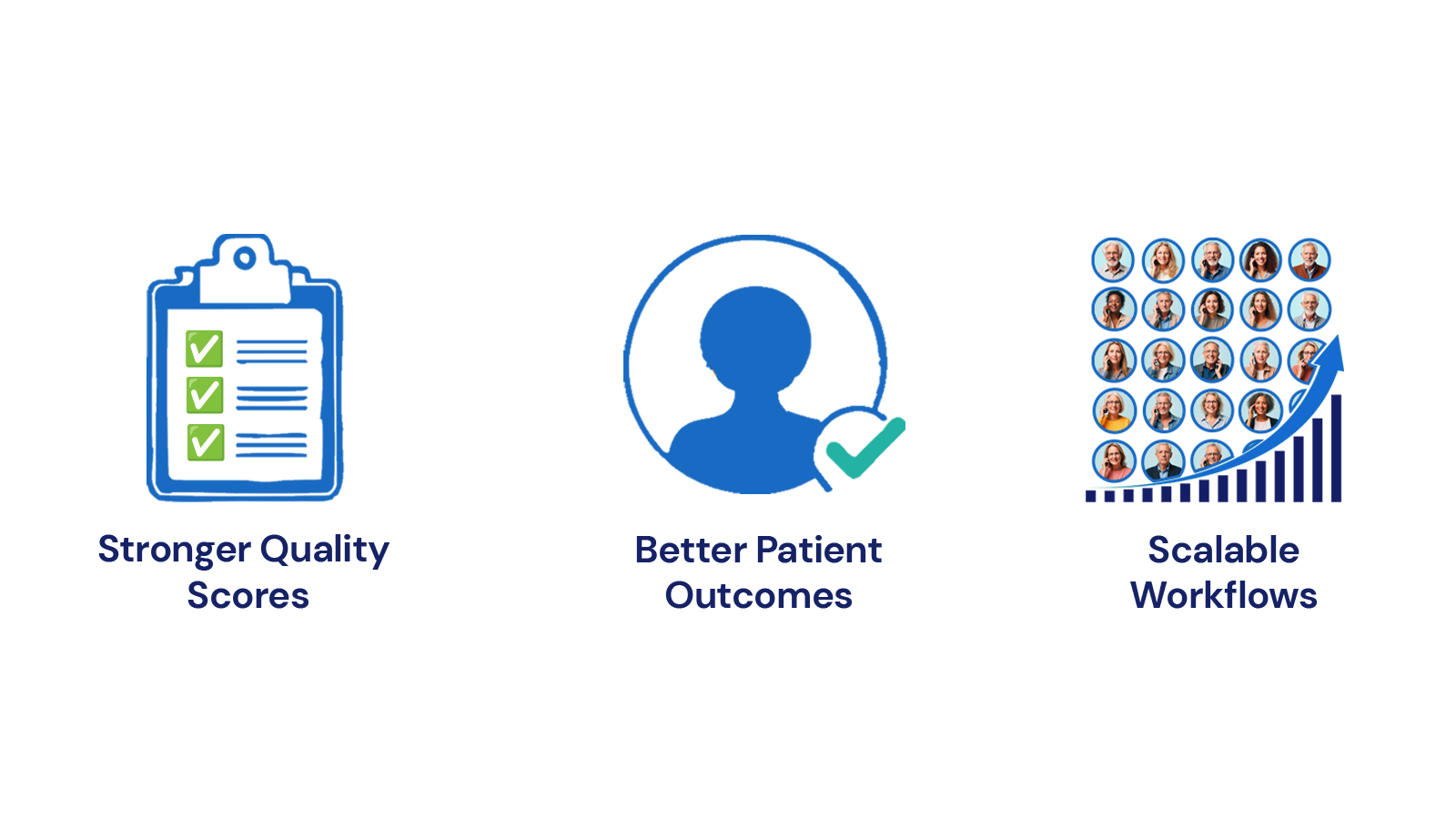
The result? Better patient outcomes, stronger quality scores, and scalable workflows that align behavioral health with value-based care.
Final Word
Value-based care leaders must ask: Are we treating depression as a quality checkbox, or as a critical determinant of outcomes?
Those who digitize the PHQ-9 collection will be better positioned to identify risk early, meet quality measures, and deliver the kind of whole person care that value-based contracts were designed to reward.
👉 Explore how QliqSOFT can help your organization reimagine behavioral health screening for the value-based era.


