

The Patient intake process is the critical first step for any patient entering a healthcare facility (hospital, clinic, pharmacy, telehealth platform, etc.). It involves collecting essential information about the patient (personal details, medical history, vital signs, reasons for visit, insurance details, etc.) before the diagnosis or treatment begins.
In today’s digital healthcare era, unnecessary friction from manual workarounds and long wait times affects both patients and healthcare professionals/staff. As organisations move towards Healthcare automation by introducing tools such as custom digital e-forms, AI chatbots, and other AI-enabled tools, they can improve overall patient engagement and care.
Why Patient Intake Time Matters in Healthcare
‘A smooth patient intake process lays the foundation for better patients' overall journey.’ The intake process directly influences patient engagement, care quality, and organizational performance.
| Factor | Manual Patient Intake | Automated Patient Intake (eForms + Chatbots) |
|---|---|---|
| Type | Paper-based, mostly staff-dependent | Digital, self-service, tech-driven |
| Data Entry | Handwritten forms, manual data entry by staff | Auto-filled fields, direct EHR integration |
| Accuracy | High risk of errors (illegible handwriting, missing fields) | High accuracy with validation checks and required fields |
| Time Required | Slow: takes about 20–40 minutes on average | Fast: Takes about 5–10 minutes and can be completed before arrival |
| Patient Experience | Wait times are longer, paperwork is laborious and repetitive | Convenient and comfortable, mobile-friendly, chatbots could guide the entire process |
| Staff Workload | Data entry, form sorting, and scanning make the workload heavy | Workload is significantly reduced, allowing the staff to focus on patient care and priority tasks |
| Compliance & Security | Risk of misplaced papers, manual HIPAA compliance | Secure digital storage, HIPAA-compliant forms, and eSignatures |
| Form Customization | Difficult to update; requires reprinting | Easily customizable digital templates |
| Integration | No automatic integration | Syncs with EHRs, scheduling systems, and patient portals |
| Patient Engagement | Limited engagement; transactional | High engagement through interactive chatbots and digital workflows |
| Follow-Up & Reminders | Manual calls or texts | Automated reminders, follow-up messages, and form prompts |
| Scalability | Difficult to scale with volume | Highly scalable for large patient populations |
Optimising patient intake is not just about convenience; it is central to operational excellence and financial performance.
The Role of Custom e-Forms in Reducing Intake Time
Customised e-forms replace laborious paper-based patient intake documents, tailored to the specific needs of healthcare facilities and patient populations.
Key Advantages of custom e-Forms:
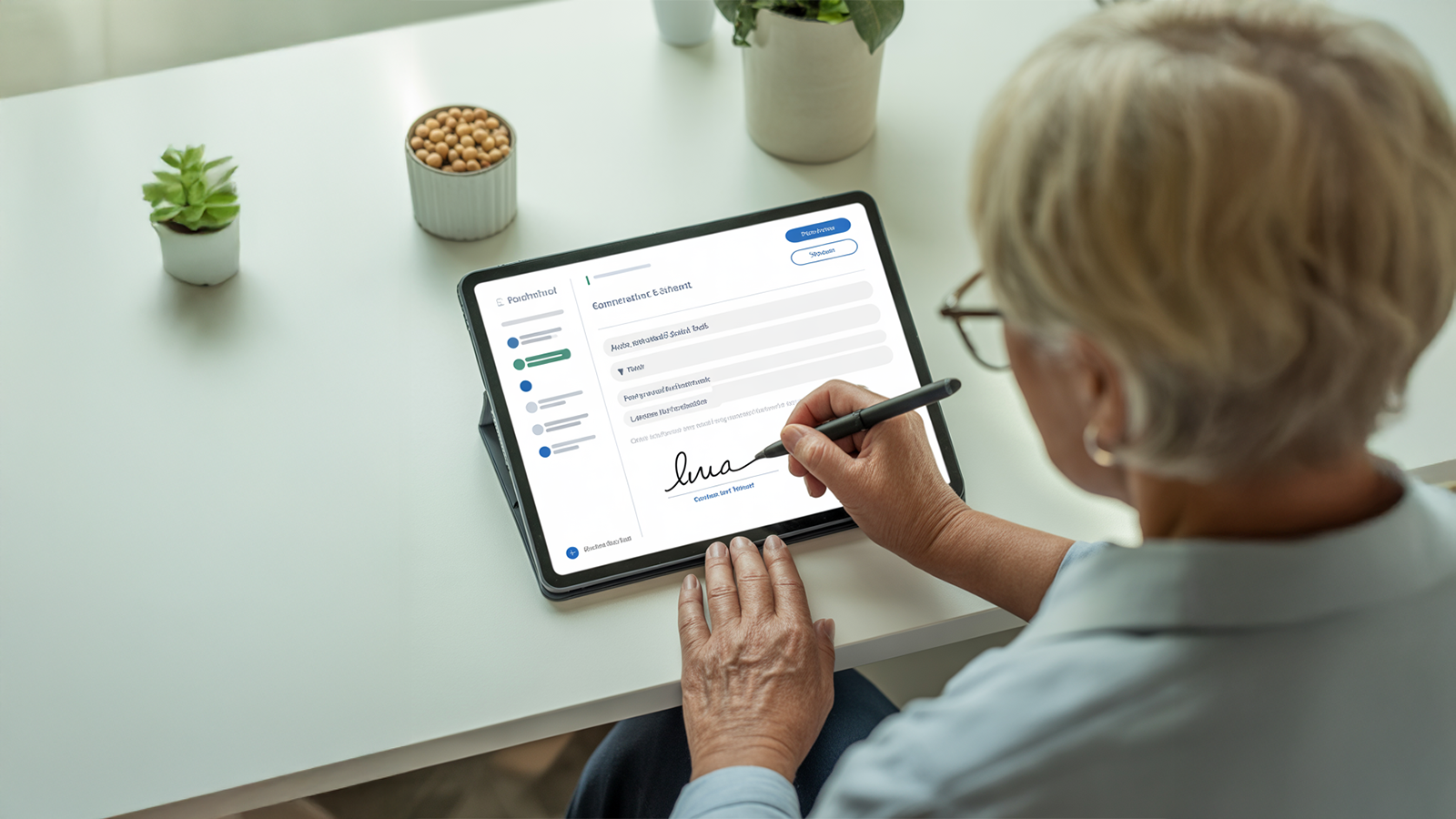
- Mobile-friendly and paperless: Unlike generic paper-based forms, these e-forms are mobile-friendly, interactive, and intelligent, and include only relevant questions, dynamic fields, and conditional logic.
- Faster, more accurate data capture: Custom-made e-forms are faster, with smart fields that auto-populate known data. Digital intake forms eliminate illegible handwriting and incomplete submissions.
- Compliance and secure: QliqSOFT’s e-signature forms are HIPAA-compliant, ensuring patients’ information is safe and providing a reliable, smooth digital signing experience.
- Streamlined EHR Integration: Custom eForms integrate directly into existing systems, minimizing manual data entry and reducing the administrative workload.
- Personalized to Each Patient: Dynamic forms display relevant questions based on patient type, visit reason, or clinical specialty, ensuring a tailored and efficient intake process. By switching to digital patient forms, healthcare organizations achieve faster check-ins, better accuracy, and improved patient satisfaction.
Also Read: Patient Engagement: Best Practices for Getting Started
How Chatbots Enhance the Intake Experience
Healthcare chatbots guide patients through the intake process via a conversational interface and intuitive design; these chatbots are the future of patient intake, transforming interactions between patients and healthcare facilities.
Benefits of Chatbots in the Patient Intake Workflow
Availability: These chatbots eliminate the need to wait for healthcare facility business hours, as they can access information, complete patient forms, and answer questions, including pre-visit information, anytime, 24/7.
Automated administrative tasks:
Chatbots remove redundancy and can handle routine tasks like:
- Preparing for and reminding patients about appointments.
- Answering generic questions related to healthcare facility services, working hours, locations, and other pre-visit preparations.
- Captures all essential information on patients’ symptoms, insurance details, schedules, medications, and consent forms.
Reduced Staff Workload: With chatbots handling routine administrative tasks, staff have more time to focus on critical work and promptly address patient needs, improving response rates and the overall patient care experience.
Higher Accuracy and Consistency: Patients will receive instructions consistently and accurately, as chatbots capture the correct information and deliver it on time, reducing errors during the patient intake process.
Enhanced Patient Engagement: QliqSOFT’s patient engagement software Chatbots are conversational and provide an interactive experience between patients and healthcare professionals/staff, not only improving the communication but also gaining trust.
Combining eForms + Chatbots for Maximum Efficiency
Patient intake automation becomes truly powerful when custom eForms and chatbots work together where patients can:
- Receive step-by-step automated guidance.
- Fill and complete digital intake forms.
- Sign documents securely.
- Submit everything before entering the facility to save time for the patient and staff.
How eForms and Chatbots Work as One:
- Patient receives a message from the chatbot with a link to the required forms.
- The chatbot guides the patient through the step-by-step process and answers common patient questions.
- Patient completes digital intake forms using QliqSOFT’s HIPAA-compliant forms.
- Patients sign the form and provide consent via the eSignature form solution.
- All the information is then securely transmitted to the healthcare organization’s EHR.
- Staff can review the submitted forms right away without the hassle of manual paperwork.
Key Advantages of the Combined Approach
- Reduction of patient intake time by 70–80%.
- Minimal or no human errors due to automated validation.
- The guided chat-like experience keeps the patients more engaged and connected.
- Enhanced compliance with safer, secured, and encrypted workflows.
- Boosts staff productivity by cutting down repetitive data entry.
QliqSOFT’s integrated patient engagement solution empowers organizations to modernize intake workflows, enhance patient satisfaction, and improve operational efficiency.
Conclusion
In a healthcare environment where efficiency, security, and patient satisfaction are crucial priorities, reducing intake time is not just helpful; it is a mandate. By integrating custom digital intake forms, AI-powered chatbots, and a reliable eSignature form solution, healthcare organizations can modernize outdated workflows into streamlined, automated processes.
With QliqSOFT’s comprehensive suite, including HIPAA-compliant forms, healthcare chatbots, and the Quincy Digital Engagement Platform, providers can offer a modern, patient-focused experience while boosting staff efficiency, improving data accuracy, and supporting better organizational revenue.
Digital intake is the future of healthcare, and with the right automation tools, that future is faster, safer, and more patient-friendly.


