

Healthcare is on the move. It is becoming more integrated with technology every day, causing healthcare institutions to re-evaluate their way of business. Successful healthcare will always hinge on providing patients with the best care possible. Yet, as patient expectations change, healthcare institutions need to be able to quickly evolve to deliver a fully engaged patient-focused experience.
While some are slower to infuse cutting edge technology into their institutions, those who are investing in upcoming tech are seeing positive results in both outcomes and patient satisfaction. One straightforward, but customizable technology that is becoming a popular addition is chatbots.
This algorithm-based solution provides healthcare institutions with a variety of key benefits that increase efficiency, drive better patient interaction, and reduce overall workload. This technology, in-time, acts as a money-saving tool, opening more investment opportunities for institutions down the line but continues to make a direct impact in the present.
Also Read: The Future of Chatbot Technology in Healthcare
Here are five great benefits to AI and chatbots for healthcare providers:
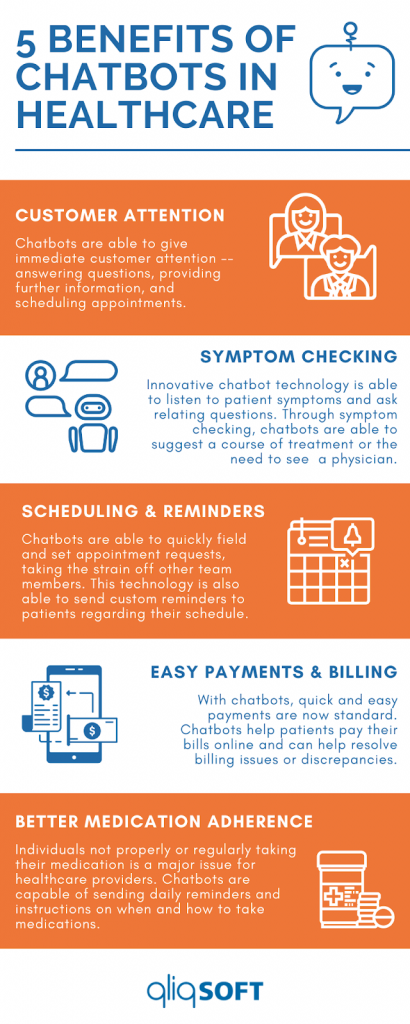
Immediate Customer Attention
Chatbots have made wait times a thing of the past. Instead of waiting for an email response, waiting to be taken off hold, or waiting in line, patients are able to receive immediate, direct customer service.
By communicating with a chatbot, patients are able to have a wide variety of concerns and questions answered instantly providing them with applicable information or further instruction. Wait times often cause great frustration and even avoidance in seeking medical advice. With chatbot technology, patients are able to get questions answered quickly, with accurate consideration of proper next steps.
Symptom Checking
More intuitive chatbots have the ability to check a patient’s symptoms and recommend care or the need to seek further medical attention. This accessible function benefits both patients and providers by helping patients get quick answers and better filtering patient health concerns for physicians. By helping assess patient symptoms, a chatbot can determine if over-the-counter medication and rest is the best course of treatment, or if a larger issue is at hand and in need of a face-to-face visit with a healthcare provider.
Appointment Scheduling & Reminders
A more repetitive and nuanced task that weighs down healthcare institutions centers around appointment scheduling and reminders. This is a critical, yet, burdensome task that continuously pulls team members away from higher priority tasks that need attention.
For anyone that has worked in healthcare, they are aware that patient scheduling can be a revolving door of days, times, and requests. Managing these appointments by hand can lead to a greater chance of error and miscommunication between provider and patient. The use of a chatbot simplifies the process by allowing patients to easily pick or alter appointment dates and enables team members to allocate more time and resources to other duties.
Try this Chatbot: Appointment Reminder Chatbot
Easy Payment & Billing Process
The vast majority of today’s consumers enjoy online billing and payment. It is secure, convenient, and simple. A chatbot provides an efficient solution to a necessary part of the healthcare process. By incorporating this technology, providers can significantly reduce patient billing inquiries all while helping these patients understand their billing statements, address any related questions, and process their payments.
Improved Medication Adherence
Technology has acted as an aid in many regards one being a checklist or alarm. One of the biggest issues healthcare providers run into is ensuring that patients accurately follow their treatment plans. Unfortunately, many patients forget to take their medications when necessary or improperly take their daily dosage.
Chatbots are able to deploy custom medication reminders and instructions for patients aiming to better improve patient engagement and ultimately, patient health. This simple, yet, important action is helping healthcare institutions have a better relationship with their patients outside the office or clinic.
Try this Chatbot: Post Discharge Care Chatbot
QliqSOFT and Healthcare Chatbots
Secure communication is at the core of everything we do here at QliqSOFT. That’s why we are proud of a new healthcare chatbot tool that combines artificial intelligence and live-agent interaction all while remaining in the same familiar environment that our secure texting app users have relied on for years. If your organization is looking to take a leap into the future of clinical collaboration, contact us today.


